Communication & Presentation Skills
Clarity, confidence, and impact for any audience
Presentations are a major part of modern professional life — conferences, reporting, networking, interviews, and internal communication all rely on clear, confident delivery. As noted in our training materials, “presentations are a huge part of many careers” and “good presenters tend to be successful”.
This full‑day course provides a practical, structured approach to designing and delivering presentations that are clear, engaging, and memorable. It is suitable for any sector, including technical and non‑technical audiences. The course is normally delivered to groups of five or more as part of a professional skills training package, but we also offer it on a one‑to‑one basis. We have experience supporting speakers with neuro‑divergencies and with anxiety related to presenting, and we tailor our approach to ensure a safe, constructive learning environment for all participants.

Why this course matters
Most presentations fail not because the content is weak, but because the message is unclear, the structure is confusing, the slides are overloaded, or the delivery lacks confidence.
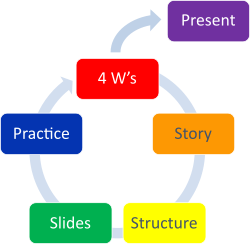
Our approach uses a systems‑thinking model to bring clarity and purpose to communication. The course is built around the Presentation Cycle, a systematic process described in our training materials as a “systematic process for producing a polished presentation”.
Participants learn to plan, design, and deliver presentations that are easy to follow and compelling to listen to.
What participants gain
- A repeatable framework for designing clear presentations
- Confidence in delivery and audience engagement
- Skills for structuring complex ideas simply
- Techniques for managing nerves and maintaining presence
- Practical slide‑design principles they can apply immediately
What the course covers
1. Purpose and audience (The 4 W’s)
Before planning anything, participants learn to define:
- Who they are speaking to
- Why they are speaking
- What they are trying to say
- So What?! — the value of the message
As the training notes emphasise: “Before you plan anything, know: Who are you speaking to? Why are you speaking? What are you trying to say? So What?!”.
This section includes practical exercises on identifying overt and hidden purposes, with examples drawn from real scientific and technical presentations.
2. Storytelling and narrative structure
Participants learn how to build presentations around a clear narrative arc, using structures such as:
- Beginning–middle–end
- Problem–Pathway–Solution
- Problem–Solution–Reasoning
The training emphasises the importance of narrative clarity. Adding too many side-quests, dead-ends, additional information etc. distracts the audience from what you really want them to remember about you and your message.
3. Slide design and visual clarity
This section focuses on creating slides that support — rather than distract from — the message. Topics include:
- Keeping slides simple and uncluttered
- Using plain, readable fonts
- Using animations for good reasons
- Avoiding overly complex figures
- Avoiding “slideuments” and “chartjunk”
- Using approximately one slide per minute
- Avoiding verbatim reading
4. Learning styles and multimodal communication
Participants learn how to design presentations that reach different learning preferences:
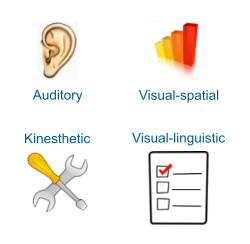
- Visual–spatial
- Visual–linguistic
- Auditory
- Kinesthetic
The training emphasises: “Your learning preference may not help your audience… Develop your presentation for all learning styles”. So we look at how to structure slides to support multimodal information delivery to maximise the opportunities for it to be understood and absorbed.
5. Delivery skills and rehearsal
The afternoon session focuses on practical delivery skills, including:
- Posture and physical presence
- Voice, pacing, and clarity
- Managing nerves
- Engaging the audience
- Timing and flow
- Effective rehearsal techniques
As the training notes: “No substitute to rehearsal… Practice out loud… Be critical of yourself”.
Participants receive structured feedback and opportunities to refine their delivery.
Who is this course for?
This course is suitable for:
- Anyone who presents complex ideas
- Project leaders and managers
- Scientists, engineers, and R&D teams
- Early‑career researchers
- Technical and non‑technical professionals
- Anyone preparing for high‑stakes presentations
Our background and experience
We have delivered professional communication and presentation skills training for more than 20 years across the UK and US, including university programmes, industry workshops, and specialist modules for technical teams.
Our approach combines systems thinking, cognitive science, and real‑world experience. Our lead trainer is a Fellow of the Higher Education Academy, and as an active R&D company we use these communication methods daily in our own scientific and technical projects. This ensures that our training is practical, applied, and grounded in real‑world practice.
Delivery options
- Full‑day course (half design, half delivery)
- On‑site or online
- Modular packages available
- One‑to‑one coaching for important presentations